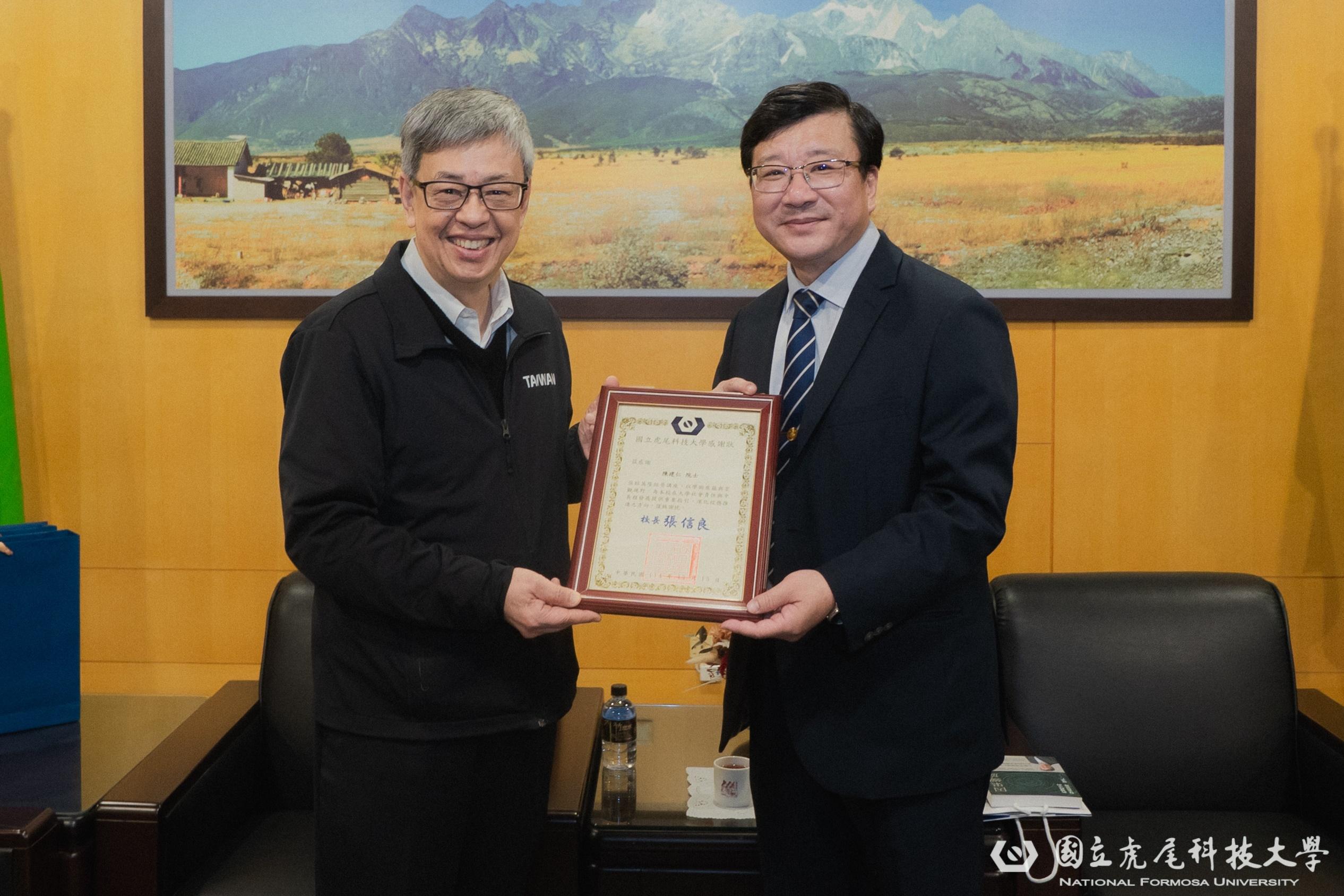
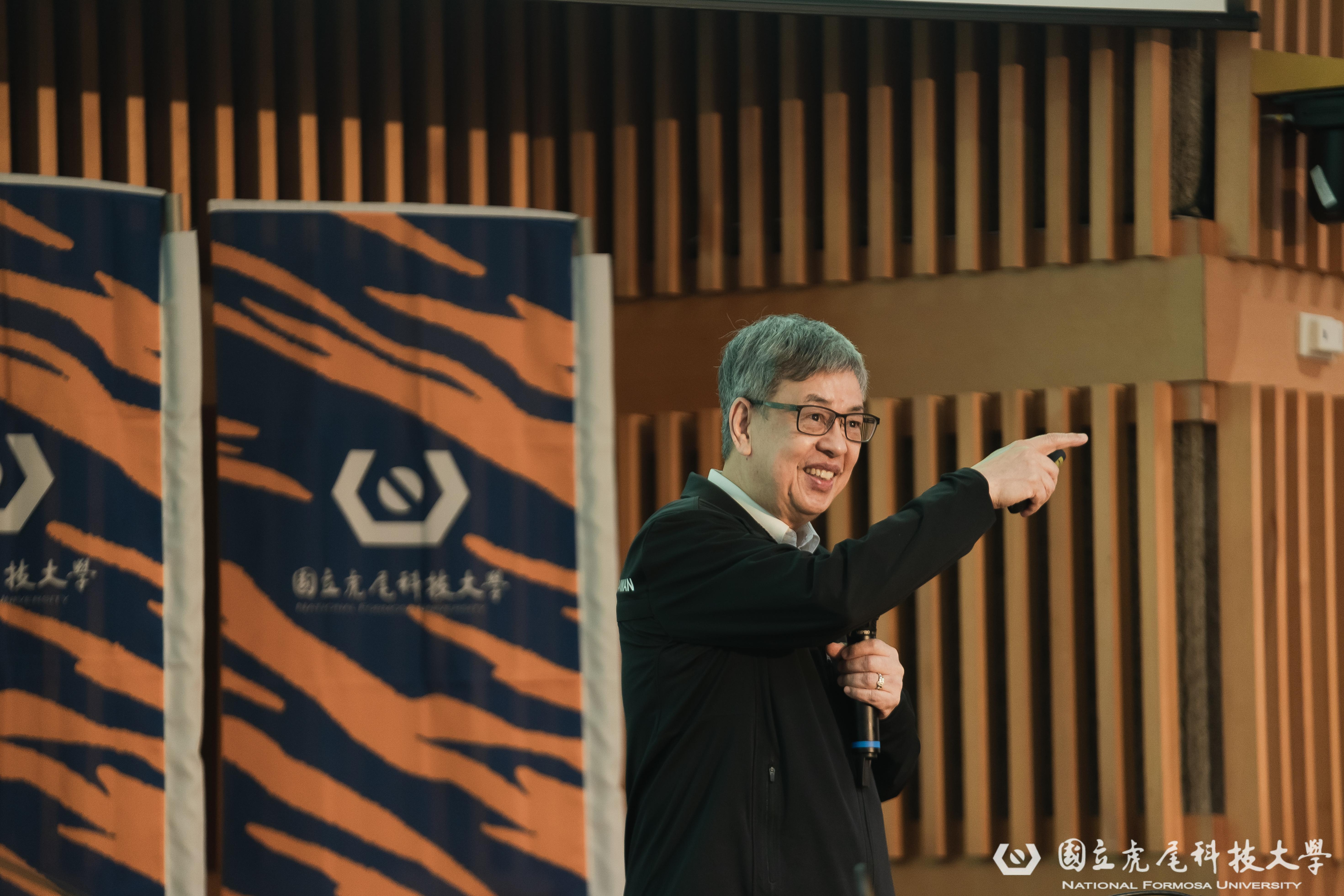
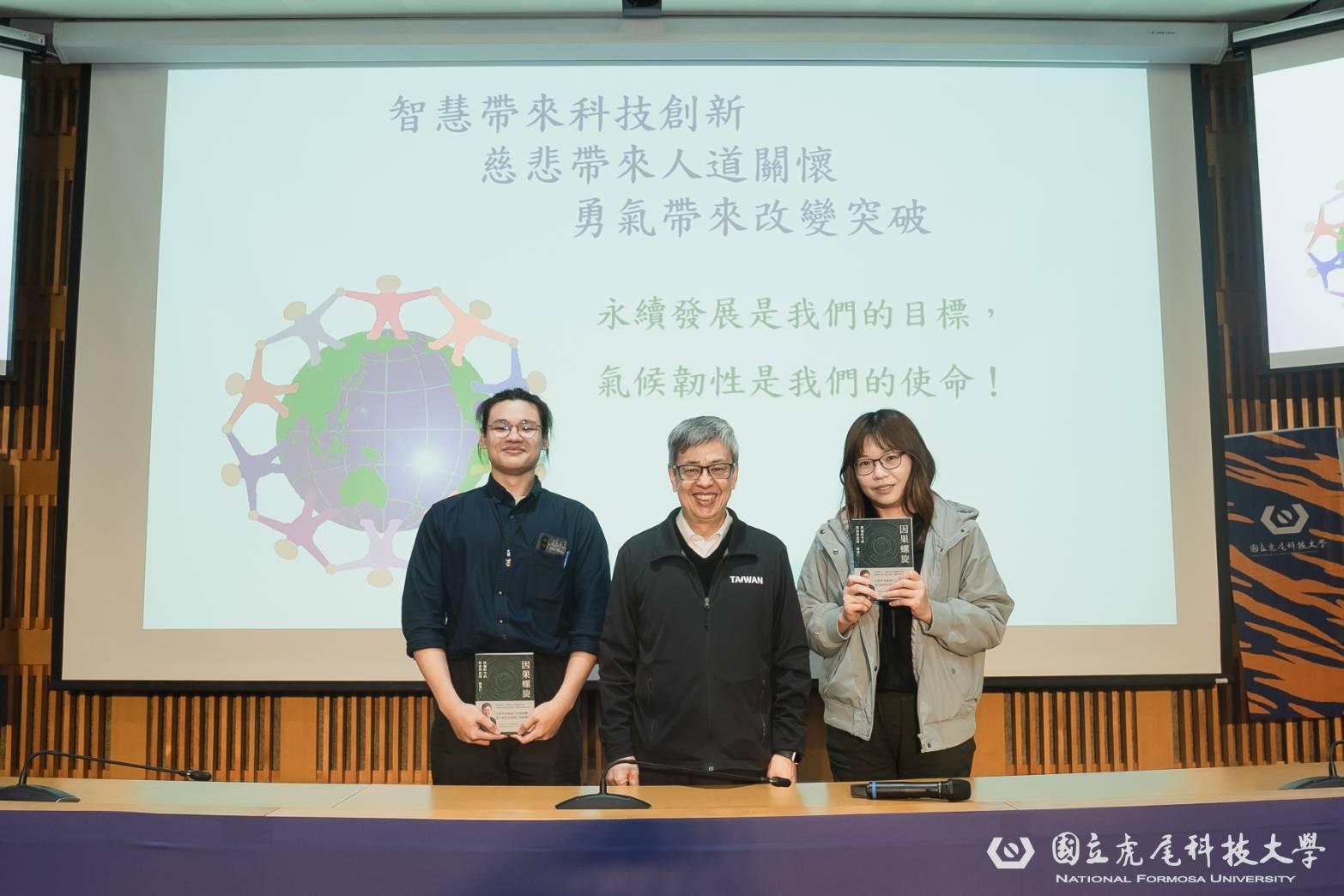
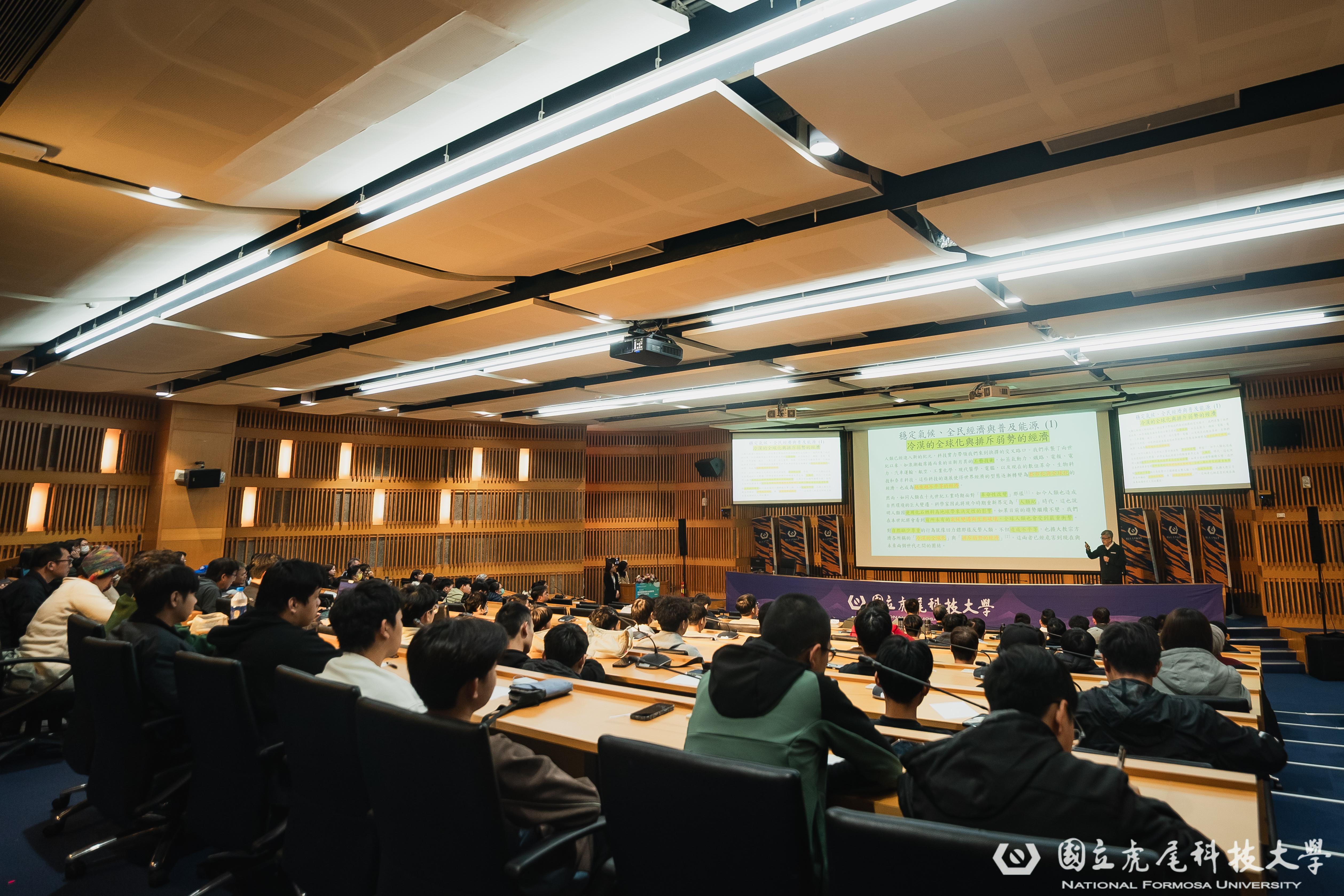
Former Vice President and Academia Sinica Academician Chen Chien-jen, invited by National Formosa University on December 15 (Mon.), delivered a lecture entitled “University Social Responsibility from the Perspectives of Climate Change and Sustainable Resilience.” He addressed sustainable development through topics ranging from the climate crisis and public health to university governance, and commended NFU for setting a goal of achieving net-zero emissions by 2048, demonstrating the determination of a technological university to put social responsibility into practice.
Chen Chien-jen noted that humanity has entered the “Anthropocene.” Since the Industrial Revolution, the extensive burning of fossil fuels has led to global warming and extreme climate events, with the backlash of environmental degradation often borne by the most vulnerable, resulting in what he termed a “globalization of indifference.” He pointed out that measuring development solely by gross domestic product (GDP) tends to overlook income inequality and environmental destruction: “We waste food, and we also waste the Earth’s limited environmental carrying capacity,” urging that equity and sustainability be addressed together.
He stated that the United Nations Sustainable Development Goals (SDGs) have become a common language among nations. From poverty eradication and climate action to sustainable cities and communities, these are all issues universities must confront. “Many sustainable technologies already exist; the key is whether they can be applied in the right places to help the right people.”
In terms of health, he cited air, water, and soil pollution as examples, noting that PM2.5 and toxic substances increase the risks of cardiovascular, pulmonary, and neurological diseases, with particularly severe impacts on children and the elderly. Climate change has also made heat waves, heavy rainfall, floods, and droughts more frequent, and the World Health Organization has identified climate change as one of the greatest health threats of this century.
He further emphasized the “One Health” concept, underscoring the interconnectedness of human, animal, and environmental health. Diseases such as dengue fever spread with changing climates: “No country can fight epidemics alone—no one is safe unless everyone is safe.”
When discussing resilient cities, he pointed out that cities must simultaneously possess the capacities to absorb, adapt, recover, and transform. From flood control infrastructure and water resource management to smart energy systems and community-based disaster preparedness, all are critical to maintaining operations and achieving rapid recovery amid shocks. “Resilience is not merely an engineering issue; it is also a test of governance and social trust.”
Returning to the role of universities, Chen Chien-jen stated that universities bear at least four responsibilities in sustainability and climate resilience: campus governance and carbon reduction; teaching and talent cultivation; research and innovation; and social engagement and local linkage. By setting net-zero pathways, offering relevant courses, promoting University Social Responsibility (USR) initiatives, and advancing industry–academia collaboration, universities can become key drivers of social transformation.
He especially praised NFU as the first university nationwide to establish an “Office of Sustainable Development and Social Responsibility” as a first-level administrative unit. Taking 2022 as the baseline year, NFU has set a target of achieving net-zero emissions by 2048, while also designating “green energy” as one of its six major institutional strategies. Through the promotion of solar installations, heat pump systems, and smart metering for energy management, NFU demonstrates a model role for technological universities in the energy transition.
In terms of local engagement, he affirmed NFU’s promotion of the “Yunlin Action Think Tank,” which assists local communities in addressing climate and industrial transformation, as well as its involvement in the “Huwei Riverside Revitalization” environmental education initiative for floodplains. By integrating community participation and ecological conservation, the university leads students beyond the campus and into society.
Chen Chien-jen concluded that sustainable development is a shared goal and climate resilience is a mission for generations. “Universities are not only halls of knowledge, but also the starting point for values and action.” He expressed his hope that NFU will continue to integrate technological expertise with humanistic concern, collaborate with local and international partners, and contribute to achieving the United Nations Sustainable Development Goals and the global vision of net-zero emissions.
NFU stated that it will take this lecture as an opportunity to further strengthen sustainable campus governance, encourage faculty and students to participate in net-zero actions, and transform the campus into an important base for cultivating sustainable citizens and green technology professionals.