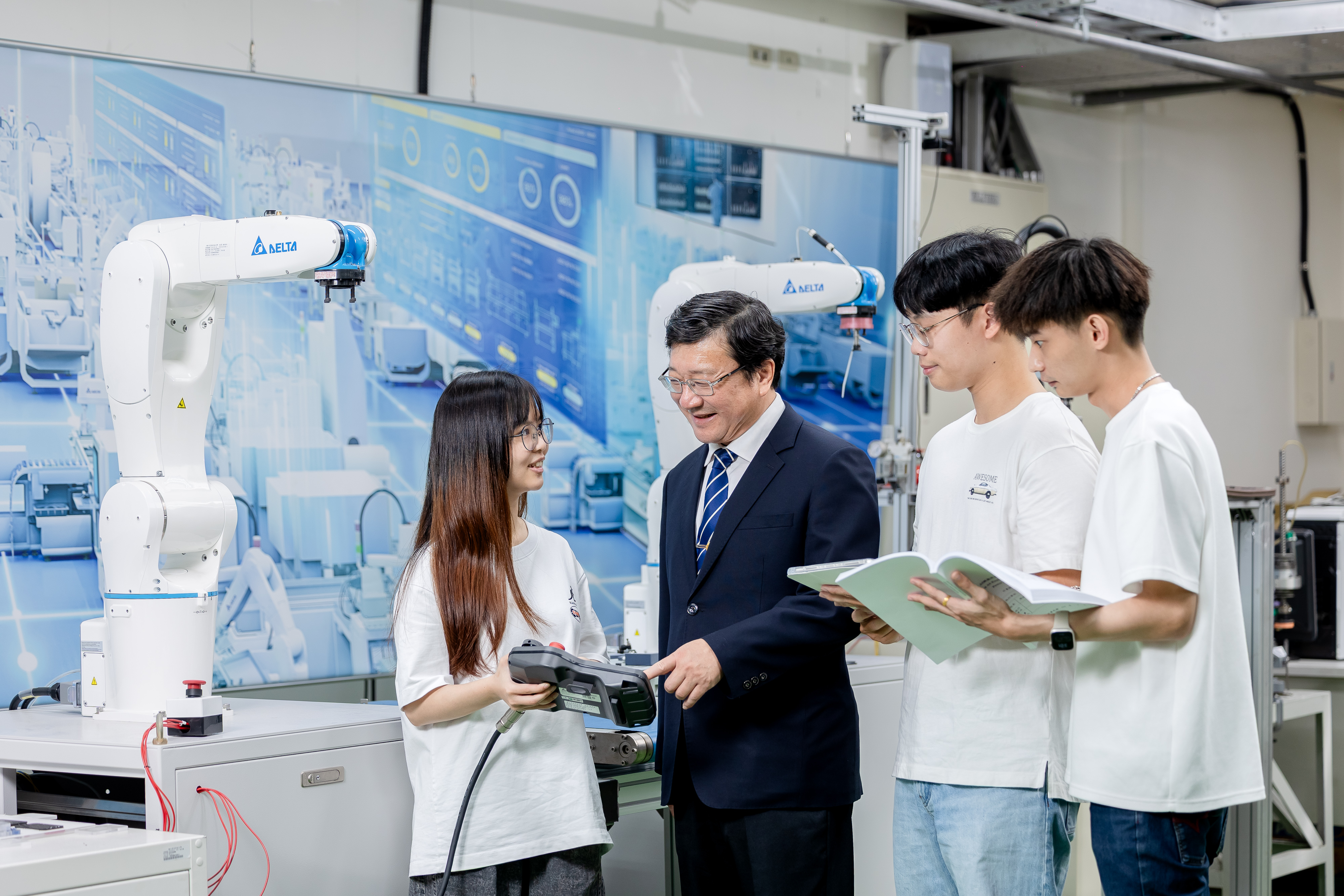
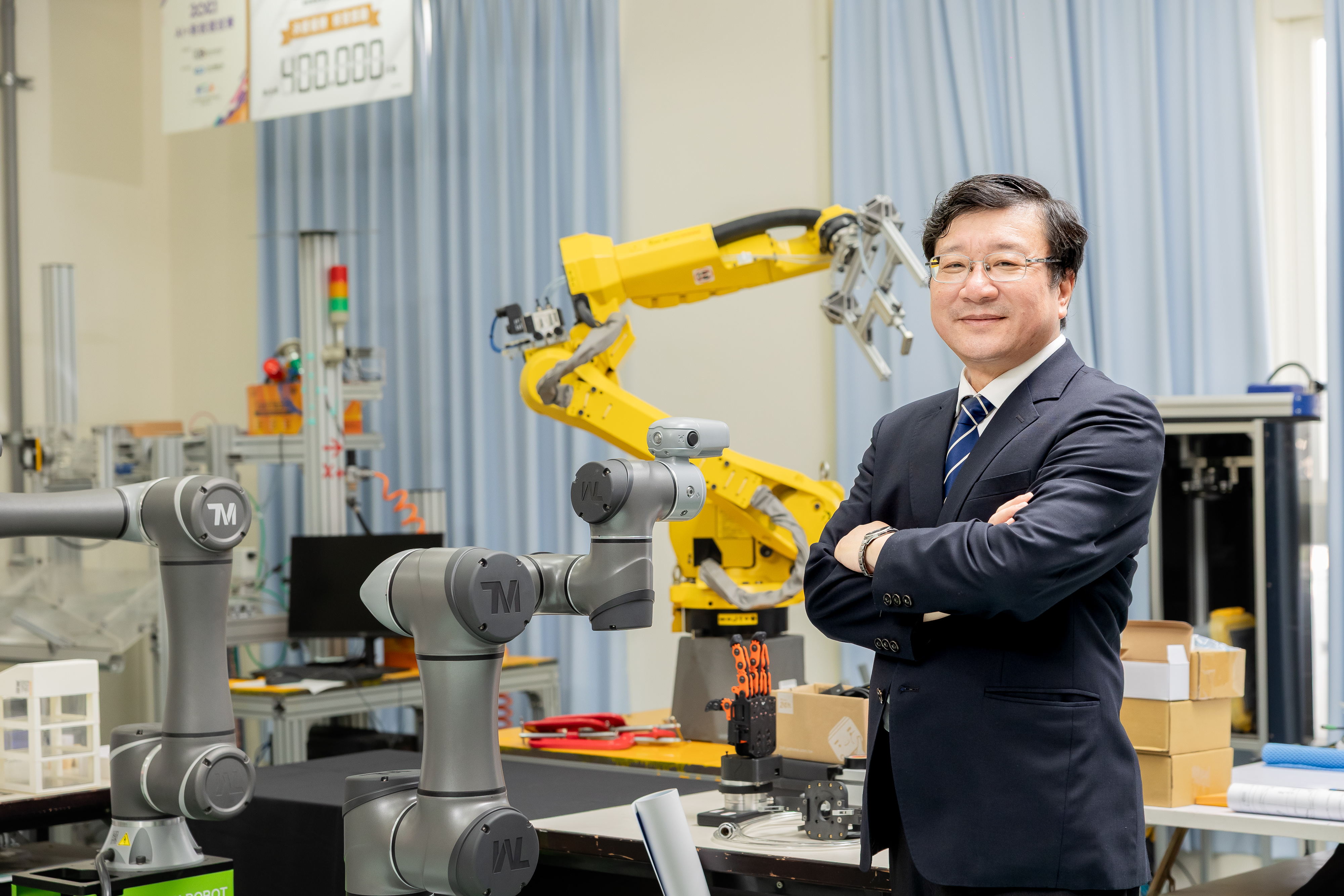
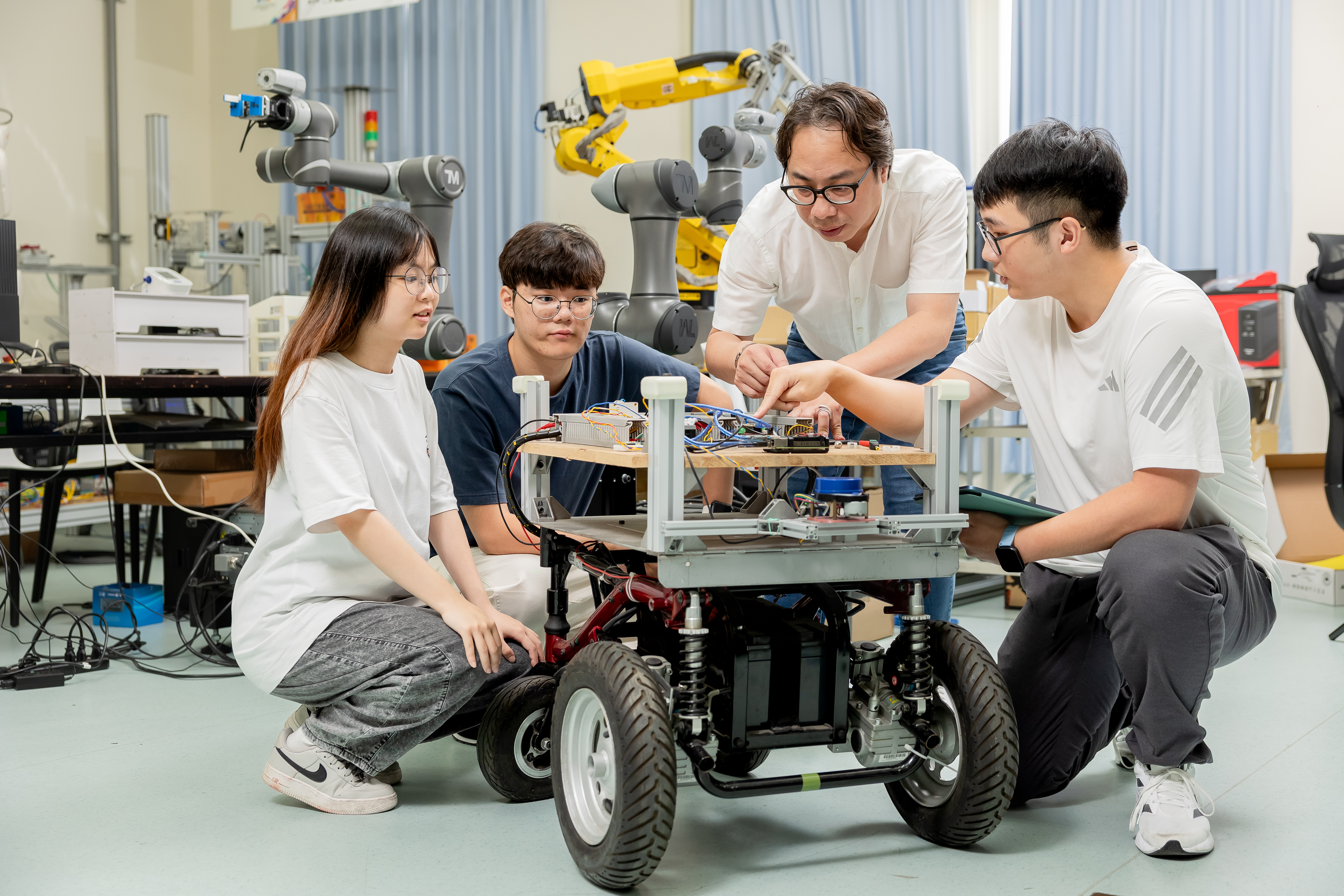
There is no denying that artificial intelligence (AI) is redefining the cities of the future. From autonomous vehicles and drone-based logistics to smart factories, intelligent machines are becoming humanity’s second set of hands. In response to this transformative trend, National Formosa University (NFU) is proactively transforming its High-Speed Rail (HSR) Campus into a microcosm of a future smart city. By creating AI-powered unmanned vehicle research and application environments, the university aims to cultivate interdisciplinary talent capable of delivering real-world technological solutions.
With the rapid advancement of AI technologies, innovations once seen only in science fiction films—such as drone deliveries, self-driving taxis and buses, and fully automated “lights-out” factories operated entirely by robots—are gradually becoming reality. As cities around the world move toward greater automation and intelligence, education must evolve accordingly. NFU President Hsin-Liang Chang emphasized that future urban lifestyles are reshaping the relationship between humans and technology. Universities, therefore, have the responsibility to anticipate trends, understand emerging needs, and cultivate the talent required to support future society. The development of NFU’s HSR Campus is founded upon this vision.
How Does the HSR Campus Simulate a Future City?
In recent years, NFU has actively participated in the Ministry of Education’s “AI-Enabled Talent Cultivation Program for Ground Unmanned Vehicle Power Modules” (hereafter referred to as the AI Talent Program). The university has established four major laboratories at the HSR Campus, creating a comprehensive research and teaching ecosystem that spans cloud computing resources, electromechanical drive systems, and field validation environments. According to President Chang, the core value of the AI Talent Program lies in “bringing technology into everyday life.” Future robots will be capable of understanding their surroundings and proactively serving people as intelligent partners. Likewise, self-driving vehicles, drones, and other autonomous systems will become commonplace in daily life. NFU’s HSR Campus is designed to be one of the first places where this vision becomes reality.
“The HSR Campus can be viewed as an expanded version of a future laboratory, where various real-world scenarios can be simulated,” President Chang explained. Future urban life will be interconnected by a wide range of unmanned vehicles—from autonomous cars on city streets and robotic transport systems in hospitals to logistics drones operating in the skies. These technologies will form the backbone of future cities. Through its forward-looking strategy, NFU aims to produce more than 500 highly skilled graduates each year who possess both practical expertise and interdisciplinary integration capabilities, transforming the HSR Campus into a hub for future city technology innovation in Taiwan.
How Does NFU Cultivate Diverse Industry Talent Through a Five-Tier Curriculum Framework?
With practical training environments already in place, curriculum development has become equally important. Hsin-Chih Lai, Professor of the Department of Automation Engineering, explained that the AI Talent Program serves as the educational foundation for future cities and has inspired the creation of a comprehensive five-tier curriculum framework. The curriculum spans topics from basic drive systems and sensing technologies to advanced delivery algorithms and management platforms, allowing students from different academic disciplines to identify their own entry points into the field.
NFU is not pursuing this mission alone. Partner institutions, including Nanhua University, National Chung Cheng University, and Chaoyang University of Technology, have joined the initiative to establish an inter-university learning network. This collaboration transforms the HSR Campus into a regional platform for technology sharing. Professor Lai noted that cross-university cooperation not only enables resource sharing but also creates opportunities for interdisciplinary exchange, helping students develop the ability to integrate diverse resources within authentic application environments.
Regarding technological applications, Tzu-Chi Chan, Professor of the Department of Mechanical and Computer-Aided Engineering, emphasized that NFU’s research extends beyond factory automation. Numerous scenarios related to everyday urban life can also be realized at the HSR Campus. For example, drone logistics systems could be deployed to optimize administrative document delivery on campus or assist in transporting delivery items from campus entrances to designated destinations.
“The motor system is at the heart of unmanned vehicles. Our integrated five-in-one power module can overcome many of the challenges currently faced by autonomous systems,” Professor Chan explained. The five-in-one power module enhances the autonomy of unmanned vehicles, enabling sophisticated path planning, obstacle avoidance, and task execution in complex environments. In particular, its proactive sensing capability allows machines to predict abnormalities before problems occur and respond accordingly. This feature is essential for ensuring that autonomous transport vehicles operating in campuses, hospitals, and factories can function reliably and continuously.
Leading Future Trends and Empowering Talent to Drive Industry Forward
Beyond logistics and transportation, Professor Chan also highlighted potential applications in healthcare, agriculture, and environmental monitoring. Technologies such as powered exoskeleton systems and medical service robots are expected to become valuable support tools in aging societies, while acoustic sensing and voice interaction systems can enhance environmental monitoring and precision agriculture. These research initiatives and applications are all designed to address future human needs. Step by step, the NFU team is transforming science fiction concepts into practical realities.
“The future is already within sight, and we are confident in leading our students forward,” President Chang remarked. His statement reflects not only a vision for education but also the guiding philosophy behind NFU’s HSR Campus and unmanned vehicle initiatives. As the world continues to change rapidly, NFU has chosen to lead rather than follow by creating an educational hub capable of envisioning, testing, and preparing for the future. Through hands-on learning, interdisciplinary collaboration, and forward-looking perspectives, the university is laying the foundation for Taiwan’s next decade of innovation and development.
Article reprinted from: CommonWealth Magazine