NFU Establishes College of Aviation to Cultivate Future Aerospace Talent
2026-06-04
Admin System
In response to the growing demand for talent in unmanned aerial vehicles (UAVs), aerospace technology, and intelligent transportation systems, National Formosa University (NFU) has established the College of Aviation, which will be officially inaugurated in the 2026 academic year. The college will be built upon the Department of Aviation Engineering, the Department of Power Mechanical Engineering, and the International Master's Program in Advanced Intelligent Vehicles. Future plans include the establishment of the Department of Artificial Intelligence Systems Engineering and the Department of Air Transportation Technology, as well as the development of the Graduate Institute of Advanced Intelligent Systems Engineering and doctoral programs. The college is expected to comprise approximately 80 faculty members and more than 1,800 students, comprehensively addressing the technological and workforce needs of Taiwan’s key strategic industries.
NFU President Hsin-Liang Chang stated that the modern aviation industry has expanded far beyond the traditional scope of aircraft maintenance and manufacturing. Next-generation unmanned aerial vehicles, low Earth orbit (LEO) satellites, intelligent manufacturing, and AI system integration have become critical drivers of advancement within the aerospace industry. NFU has long been dedicated to aviation engineering, UAV research and development, and practical training. Through the College of Aviation, the university aims to establish an integrated ecosystem encompassing talent cultivation, research and innovation, and real-world validation platforms.
Regarding academic development, the Department of Aviation Engineering will continue to cultivate professionals in aircraft and UAV maintenance, design, manufacturing, and avionics systems integration. The Department of Artificial Intelligence Systems Engineering will focus on AI technologies while integrating sensing systems, information and communication technologies, intelligent control, and unmanned vehicle system integration. Graduates will be prepared for emerging industries such as drones, autonomous vehicles, robotics, defense applications, and intelligent manufacturing. Meanwhile, the Department of Air Transportation Technology will concentrate on passenger and cargo aviation operations, logistics management, flight operations administration, and Unmanned Aircraft System Traffic Management (UTM), addressing workforce demands in aviation operations and emerging airspace applications.
As the low Earth orbit satellite and space industries continue to expand, workforce demands are evolving from component manufacturing toward system-level verification, hardware-software integration, mission operations, and data applications. NFU plans to incorporate satellite systems engineering into the College of Aviation’s academic framework. Through interdisciplinary collaboration and resource integration, students will gain exposure not only to aviation, UAVs, and intelligent vehicles, but also to spacecraft development and ground system integration technologies. The program aims to cultivate advanced R&D professionals with expertise in satellite mission planning, hardware-software integration, ground verification, and system-level debugging.
To ensure that the college's development aligns closely with industry needs, NFU has invited experts from the aerospace, UAV, aircraft maintenance, and air transportation sectors to provide guidance and recommendations. These industry advisors will assist in shaping academic positioning and strengthening industry partnerships. Among them, Wefly, a subsidiary of Gem Precision Group, operates Thailand’s first training institution accredited to provide European EASA-certified aircraft maintenance engineer and commercial pilot training. The company has expressed interest in collaborating with NFU’s Aviation Maintenance Training Center to jointly cultivate aviation maintenance professionals with international certification standards and practical expertise.
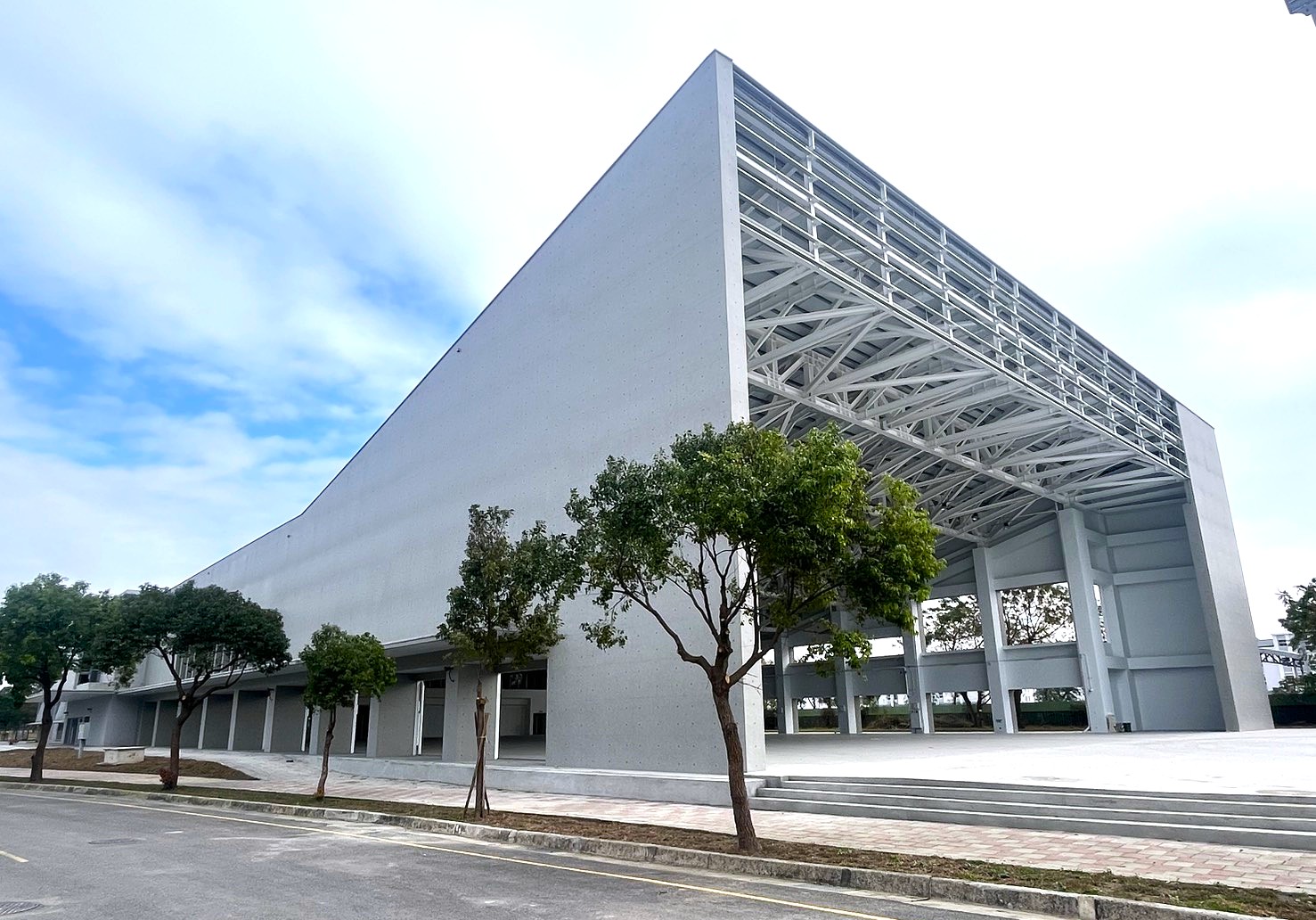
In terms of infrastructure, NFU’s High-Speed Rail (HSR) Campus will serve as the primary development base for the College of Aviation, with relocation planned for the 2029 academic year. One of the key facilities, the International Maintenance Hangar, has a total construction budget of nearly NT$500 million and a floor area of approximately 4,744 square meters. The facility is capable of accommodating Airbus A320-class aircraft for hands-on instructional training. Future developments will also integrate newly constructed teaching buildings at the HSR Campus, gradually establishing advanced educational and research facilities for wind tunnel testing, aircraft manufacturing, flight simulation, and intelligent systems development.
President Chang emphasized that through campus expansion, interdisciplinary resource integration, and the development of practical training environments, NFU will strengthen industry-academia collaboration and cultivate professionals equipped with intelligent application and systems integration capabilities. The university will continue supporting Taiwan’s defense self-reliance initiatives and the growth of emerging aerospace industries.
NFU’s International Maintenance Hangar at the High-Speed Rail Campus is capable of accommodating Airbus A320-class aircraft for hands-on instructional training.