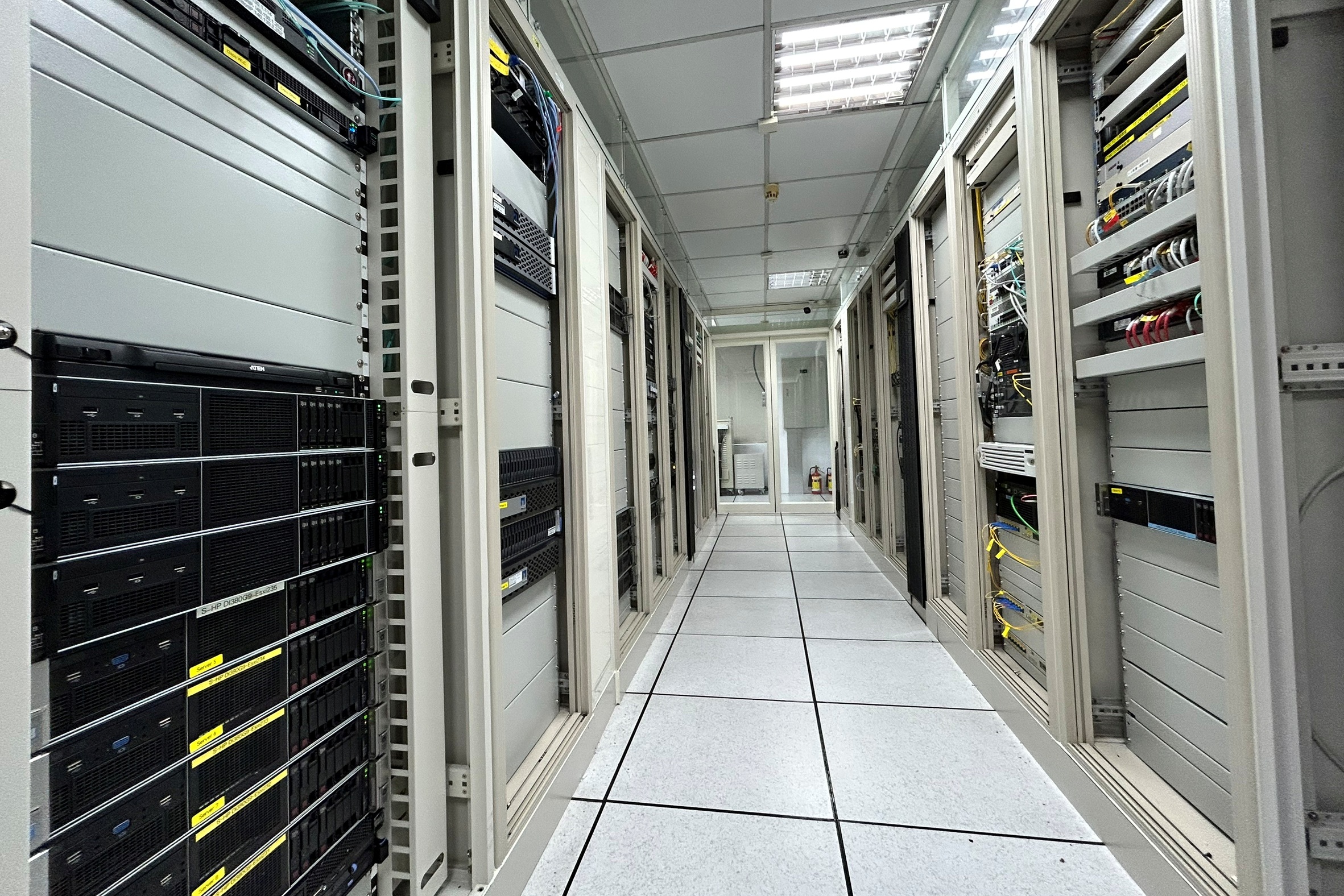
On Friday, January 23, National Formosa University (NFU) completed the deployment of its new AI cloud computing server infrastructure, significantly upgrading the University's AI-enabled environment and strengthening its overall capacity to support engineering education and talent development. With a long-standing commitment to engineering and technological education, NFU has established strong teaching and research capabilities in precision machinery, mechatronics, intelligent manufacturing, and systems engineering. Supported by a grant of NT$13 million from the Ministry of Education, the University expanded its AI core infrastructure by adding NVIDIA H200 and NVIDIA RTX PRO 6000 GPUs. This investment institutionalizes and integrates NFU's existing engineering and AI capabilities into a comprehensive platform, enhancing the University's readiness for AI applications across education.
Director Hui-Kai Su of the Computer and Information Center explained that the AI infrastructure upgrade was implemented through the Ministry of Education's AI Empowerment Program, including the "Drone Industry Talent and Technology Development Base Program", together with support from the Higher Education Sprout Project. The initiative integrates teaching, research, and administrative resources while systematically investing in AI cloud computing power, computing platforms, and a high-speed campus network, creating a solid foundation for engineering education and technology development.
Through centralized AI computing resources and the University's 20 Gbps high-speed backbone network, classrooms for engineering disciplines can remotely access high-performance AI computing power without requiring individual deployment of large numbers of GPUs. This enables AI technologies to be integrated rapidly and reliably into existing engineering courses and practical training, further enhancing both the depth of instruction and the hands-on learning experience.
The comprehensive AI infrastructure upgrade also accelerates the integration of AI technologies into drone design, manufacturing, inspection, and application processes. By leveraging cloud computing power and integrated data processing platforms, the University supports drone-related courses in flight data analysis, image recognition, intelligent diagnostics, and manufacturing process optimization. This helps transform conventional remote-controlled drone training into intelligent autonomous flight applications while supporting the drone industry's transition toward automation and smart technologies.
In addition, NFU is aligning this AI cloud computing infrastructure with talent development initiatives promoted by Taiwan's Ministry of Economic Affairs, incorporating the platform into industry-oriented training programs that support interdisciplinary education and practical applications in drones, artificial intelligence, and smart manufacturing. Vice President for Research and Development Chao-Tsung Sung noted that the new AI facilities have already been successfully applied to industry-oriented courses, capstone projects, and technology validation, enabling students and industry partners to collaborate on practical development and problem-solving. The positive feedback received from industry demonstrates the tangible impact of AI-enabled education within Taiwan's technological and vocational education system.
NFU President Hsin-Liang Chang stated that the University has already incorporated artificial intelligence into engineering design assistance, manufacturing analysis, and systems optimization for both teaching and research, providing a strong technical foundation for AI-assisted engineering practice. He emphasized that, through decades of engineering education experience combined with support from the Ministry of Education and the Ministry of Economic Affairs, NFU has gradually established a comprehensive AI ecosystem capable of simultaneously supporting engineering education, research, and industry talent development. Looking ahead, the University will continue strengthening the cultivation of emerging technology professionals while reinforcing the institutional role of technological and vocational education in developing high-level engineering and technology talent.
Article and photographs provided by the Computer and Information Center and the Office of the Secretariat.